The basic difference
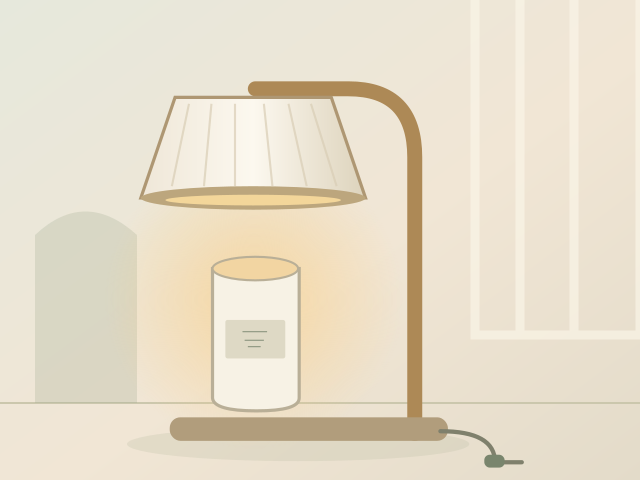
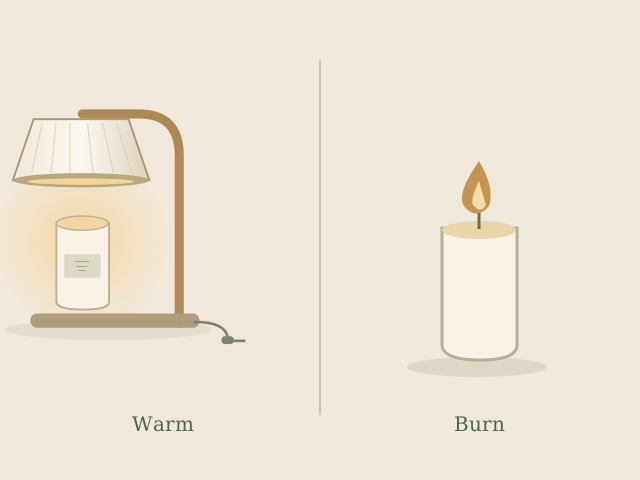
Burning uses a lit wick and consumes wax as fuel. A warmer lamp supplies heat from above without lighting the wick. In both cases, the candle can release fragrance. In neither case should you assume that any jar, location or length of use is appropriate.
This comparison is about household choices, not a laboratory evaluation. Warm Home Notes has not tested fragrance output, temperatures, emissions or candle longevity. There are no universal performance scores here because the candle, appliance, room and operating settings all matter.
Compare the experience you actually want
| Consideration | Warmer lamp | Burning a candle |
|---|---|---|
| Equipment | Compatible lamp, bulb and electrical outlet | Suitable candle, lighting tool and extinguishing method |
| Wax use | Wax remains while fragrance can diminish | Wax is consumed during burning |
| Routine | Check fit, settings, cord and heated parts | Check wick, flame, candle spacing and burn instructions |
| Main practical limits | Jar clearance, bulb requirements and safe placement | Flame management, wick behavior and suitable surroundings |
If your favorite part of a candle is its flame, a warmer may feel like a different object entirely. If your priority is fragrance while you read, the lack of a flame may suit you. Consider whether the lamp's visible light works with the room rather than treating the two methods as identical mood lighting.
Fragrance is not a guaranteed upgrade
You may notice different fragrance behavior when you change methods. A warmer's setting and distance from the wax affect its operation; burning depends on the candle's wick and construction. Room size, ventilation and your perception of a scent also shape the experience.
Do not buy a lamp on the promise that every candle will smell stronger. A scent that seems faint is not a reason to exceed bulb ratings or lower the shade outside its approved range. A large open living room and a small enclosed office are different environments, so one person's experience cannot establish your result.
Similarly, a candle with lots of wax left is not necessarily a candle with lots of usable fragrance left. Avoid fixed claims about doubled or tripled life unless there is reliable evidence for the exact comparison. You can keep a simple personal note of settings and satisfaction, but it will be an observation about your setup rather than a general test result.
The risks change; they do not disappear
The absence of an open flame removes that particular feature of use. A warmer still has an electrical supply and parts designed to produce heat. The jar and melted wax can also become hot. Treat it as an appliance, keep children and pets away and follow both lamp and candle instructions.
A burning candle requires deliberate flame supervision. The National Candle Association advises keeping burning candles attended and away from things that can ignite. See its candle safety guidance for that method's precautions.
Do not light a candle while it is under an operating warmer. Do not use a timer to justify going to sleep while the appliance operates. Turn it off before you leave or sleep, and use the warmer safety checklist to plan a consistent routine.
Maintenance looks different
For burning, follow the candle maker's wick trimming, burn duration and end-of-use instructions. A candle's label matters more than a general internet rule. Stop if the container is damaged or the candle behaves abnormally.
For warming, inspect the lamp and cord, keep the platform clean after everything is cool and replace the bulb only as directed. Follow the manufacturer's procedure if it calls for removing fragrance-depleted wax. Do not pour liquid wax into drains or use an improvised hot-wax method simply because another user recommends it.
Wax disposal introduces handling work that a product photo rarely shows. Think about whether you are comfortable following that procedure. If the instructions are unclear or the container is awkward to handle safely, ask the manufacturer rather than guessing.
Can you switch between methods?
Do not assume that a candle remains suitable for burning after repeated warming. The wick may shift or become submerged, and the surface can change. Ask the candle maker whether switching is allowed and what inspection or care it requires.
Before any permitted switch, let the candle return to the condition specified by its maker and inspect the jar and wick. Never dig into the candle or reposition a wick as an improvised repair. A damaged jar or off-center wick is a reason to stop, not a reason to see whether it will still work.
Which method fits your household?
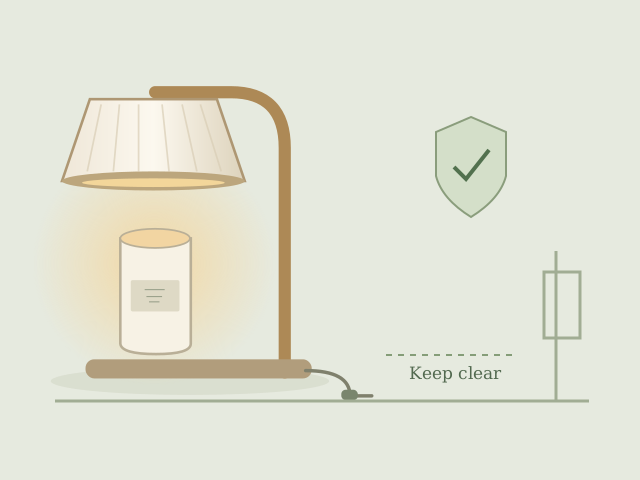
A warmer may make sense if you have a confirmed compatible jar, an appropriate surface and an accessible outlet. Burning may suit someone who specifically wants flame ambiance and can follow the candle's requirements. Either may be unsuitable in a room where the equipment cannot stay clear of pets, children or fabrics.
For fragrance-sensitive households, neither method solves the basic question of whether everyone wants scented products. Discuss that first. For rentals, dorms and shared spaces, check the actual rules; a flame restriction does not automatically authorize a heated electrical appliance.
Make the choice in this order
- Confirm which methods the candle maker permits.
- Check the room's rules and practical placement options.
- Decide whether fragrance, visible flame or electric light is your priority.
- Consider maintenance and the parts you will need later.
- Follow the appropriate operating routine every time.
There is no need to declare a universal winner. The useful distinction is whether your chosen method fits your candle, your setting and your willingness to manage it carefully.