Keep the instructions with the candle
Read the candle label before discarding any packaging. Save the maker's guidance about wick care, permitted uses, session length and when to stop. If a jar has no readable instructions, ask the seller or maker rather than borrowing directions from a different candle.
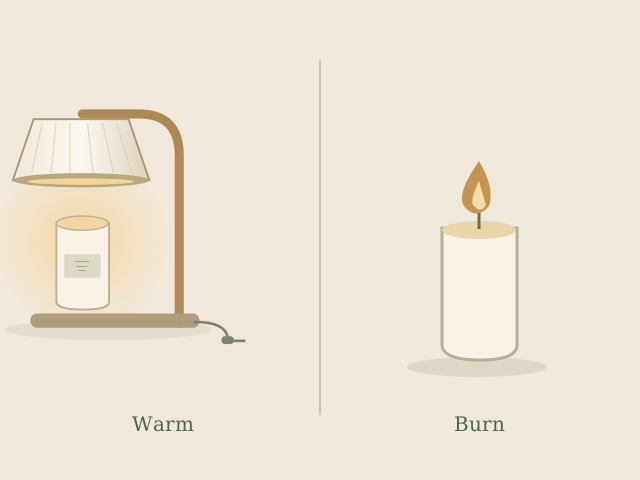
When you also use a warmer, keep its manual separately. The candle label describes the candle; the lamp manual describes the electrical appliance. A maintenance step suitable for a burning candle may be unnecessary or inappropriate under a warmer.
Make a simple note if you rotate several candles: identify the jar, its intended method and any special instructions. This is particularly helpful for unusual containers or gifts whose packaging may otherwise be lost. It is an organization aid, not a record of product testing.
Store candles where conditions stay consistent
Choose a cool, dry storage location away from direct sunlight and other heat sources, following any specific manufacturer directions. Avoid a windowsill or a shelf beside a heating vent. Keep candles upright so containers and wax remain in their intended position.
Do not assign a universal storage temperature or shelf life. Wax blends, fragrance and container finishes differ. If the maker gives a date or storage condition, use it. A candle's appearance alone cannot establish remaining fragrance performance.
Use a lid for storage if the candle was supplied with one and the maker permits it. Allow the candle to cool first. A storage lid should not remain on a candle during warming or burning unless the product instructions specifically describe that use.
Inspect the container every time
Look for cracks, chips, leaks or loose decorative components while the candle is cool. A container damaged in shipping or dropped during cleaning should not be treated as suitable for continued heating. Do not repair a cracked candle jar with adhesive and return it to use.
Check that the bottom sits evenly. If the jar rocks on a level surface, investigate before using it. Inspect the interior for foreign objects, and follow the maker's directions for removing debris. Do not dig into the wax with a sharp tool or modify the wick as a general repair.
Container compatibility matters for warming too. Candle Warmers Etc. notes that candle makers should be consulted when jar suitability is uncertain; see its manufacturer FAQ. That advice is not approval of every candle or warmer combination.
Cleaning: cool first, then use the permitted method
Clean only when the candle and any appliance are off, disconnected as instructed and fully cool. For the outside of a jar, use a method allowed by the candle maker; a gentle dry wipe may be sufficient for loose dust. Decorative finishes and paper labels may be damaged by moisture or solvents.
For the lamp, follow its cleaning instructions. Do not immerse electrical parts or let liquid enter switches and sockets. Do not use abrasive tools to remove wax from a finish without permission. If residue cannot be removed by the permitted method, ask the manufacturer.
Avoid aggressive temperature changes as a wax-removal shortcut. Do not use an oven, microwave, freezer or boiling-water method just because it is popular online. Unknown glass and finishes may be unsuitable, and this guide has not evaluated those methods.
Keep burning care separate
For candles used with a flame, follow the specific wick trimming and burn instructions. The National Candle Association provides general candle safety guidance, including keeping burning candles attended and clear of flammable objects. The maker's own limits still apply.
Do not generalize one brand's wick length or minimum wax level to all candles. Check the condition of the wick and container, and stop if use becomes abnormal. Avoid attempts to repair an off-center or damaged wick yourself.
Extinguish according to the maker's directions and allow cooling before moving the jar. Do not treat a warm container as ready to put into storage or place a lid on it while it is still hot without an explicit instruction to do so.
Care when using a warmer
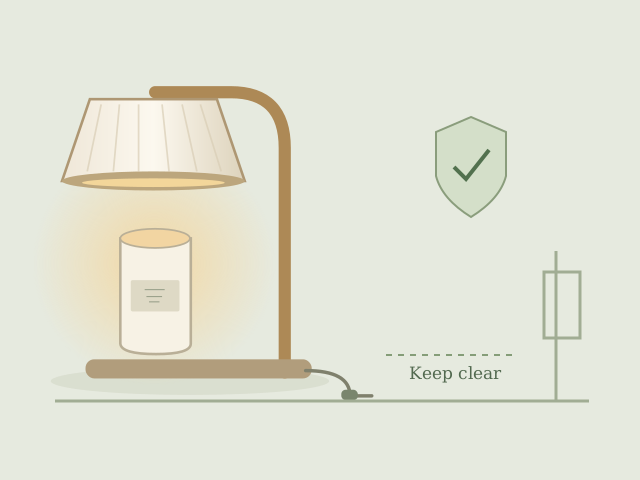
Use only a permitted jar with the approved lamp arrangement and an unlit wick. Inspect the cord, shade and candle platform as well as the jar. A clean candle does not make a damaged appliance usable. See the warmer safety guide for the full routine.
Repeated warming can reduce useful fragrance while leaving wax in the jar. Follow the manufacturer's procedure if it recommends removing a depleted layer. If that procedure involves hot wax and you are unsure how to handle it safely, stop and request clearer guidance.
Do not pour wax into plumbing. Let removed wax cool in a suitable receptacle according to the relevant instructions, then follow local waste guidance. This article does not provide a universal disposal rule for every fragrance blend or container.
A maintenance schedule without invented deadlines
| When | What to inspect | What determines the next step |
|---|---|---|
| After cooling | Exterior dust and platform residue | Permitted cleaning method |
| When changing candles | Dimensions and container suitability | Lamp and candle compatibility |
| When scent diminishes | Use history and approved setup | Maker's wax-care advice |
| Before storage | Cooling, lid suitability and upright position | Candle storage instructions |
There is no need to invent a weekly deep-cleaning schedule. Maintain the equipment according to its instructions and condition. Replacing a damaged item is preferable to preserving it through an improvised repair.
Reuse and end-of-life decisions
A decorative jar may be appealing for reuse, but its suitability for food, new candles or further heating is not established by appearance. Follow the maker's guidance, and do not reheat a container that has been damaged during wax removal.
For recycling, check local rules and the material's condition. Do not assume every candle vessel belongs in curbside glass collection. Thoughtful care includes knowing when the candle or container should leave service.