Start with the job you want it to do
Decide whether you want to warm one favorite jar, switch between several sizes or give the lamp a permanent place in a reading corner. These are different buying problems. A fixed-height lamp may suit one known jar; a collection of tall and short candles calls for closer attention to the adjustment range.
You may also care about light. The bulb is both a heat source and a visible part of the room. If you prefer a nearly dark room, look at the control options and how much light the shade directs outward. Do not assume that a dimmed lamp will warm a candle as quickly as it does at a higher approved setting.
What a lamp actually does
In a top-down warmer, a purpose-specified bulb heats the candle surface. The wax softens and melts, releasing fragrance without a lit wick. A bottom-up plate warmer is a different appliance; its dimensions and operating instructions do not automatically apply to a lamp. An ordinary desk lamp should not be treated as a candle warmer.
Warming does not reproduce the flame experience. It still involves hot parts, warmed glass and liquid wax. It also does not make fragrance permanent. A candle can lose its useful scent even when plenty of wax remains. There is no reliable universal promise that every candle will last a particular number of times longer.
Measure before you compare styles
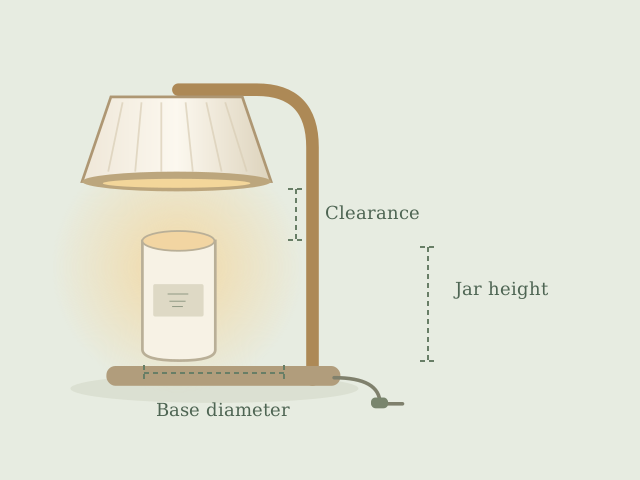
Write down the jar height, widest diameter and the space available on your table. Check the lamp's usable candle platform, not just its overall base width. Decorative stems and shade rims can limit the opening even when the lamp looks spacious in a photograph.
The full lamp height is not the maximum candle height. Ask for the usable clearance and the manufacturer's required distance between the heat source and the candle. Also consider what happens as the wax level falls: the jar height stays the same while the wax surface gets farther from the bulb.
An adjustable lamp is helpful only when its permitted settings work for your jar. Do not place a candle on books or improvised risers to compensate for a poor fit. Our jar size and clearance guide shows how to organize these measurements without guessing from candle weight.
Compare features by the problem they solve
| Feature | Useful question | What to verify |
|---|---|---|
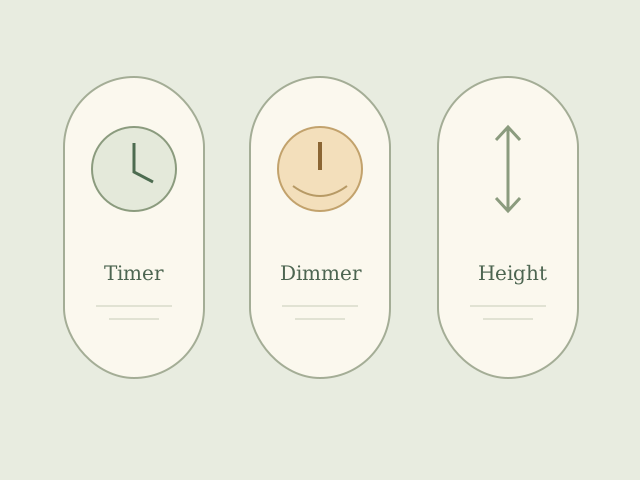
| Dimmer | Do I want to adjust light and warming intensity? | Approved operating range and whether control is smooth or stepped |
| Adjustable height | Will I use different candle sizes? | Usable range, locking mechanism and required operating clearance |
| Replaceable bulb | Can I keep the lamp working later? | Exact bulb specification, replacement source and installation instructions |
| Stable base | Can this work on my chosen table? | Usable platform, footprint and an unobstructed cord route |
A timer is convenient, but it does not supervise a lamp. A dimmer is not necessarily a thermostat, and a height control does not establish compatibility by itself. Read our feature explainer for the differences that product listings often blur.
Read the electrical details and manual
For a US home, check that the lamp is intended for your electrical supply and has the appropriate plug. Do not infer this from a seller offering US shipping. Confirm the rating on the device and instructions, especially for imported products.
The bulb specification should identify the required base, type and wattage, along with any other restrictions the manufacturer sets. A bulb that fits the socket may still be unsuitable. Do not replace the specified bulb with a higher-wattage version to speed up melting. Availability of the correct replacement is part of the cost of ownership.
If a listing claims an electrical safety certification, verify that the claim applies to the exact model through the relevant certification organization or documentation. A badge in a product image is not a substitute for model identification. This guide does not certify any lamp or recommend a particular listing.
Plan the location before ordering
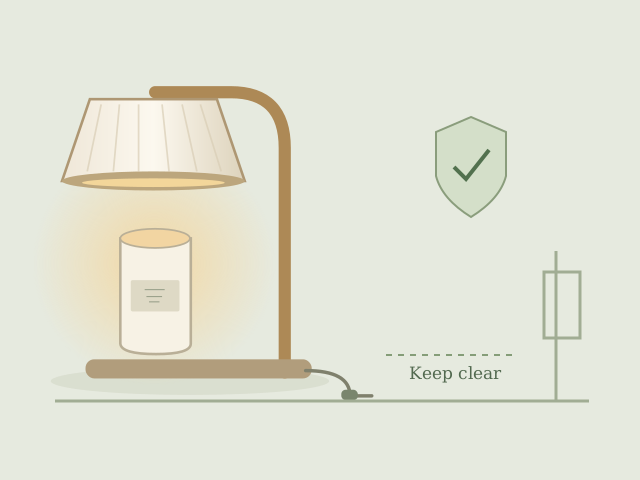
Choose a level, stable surface suitable for heat exposure under the product instructions. Allow the clearances the manual requires. Keep the lamp away from fabrics, paper, water and places where a child or pet can reach it. Consider the cord too: a suitable tabletop can become an unsuitable location if the cord crosses a walking path.
Think through your ordinary movements. Will you reach over the shade to open a window? Will a cabinet door swing into it? Will the lamp displace items until they crowd the candle? Our placement guide helps you evaluate a room as it is actually used.
Check the less glamorous purchase details
Look for an accessible manual, seller identity, return terms, warranty scope and a clear list of included accessories. Read whether a bulb is included and whether replacement bulbs are sold separately. Compare the total practical commitment rather than choosing on the sticker price alone.
Ask the candle maker whether its container is suitable for warming if that information is absent. Decorative jars, unusual finishes and repurposed vessels deserve particular caution. A lamp listing's broad compatibility language cannot answer every question about an individual candle.
A simple decision example
Imagine that you own one tall jar and want a lamp for an evening reading table. First eliminate models with unconfirmed clearance. Next check the table footprint and outlet location. Then decide whether a timer or dimmer would make your routine easier. Only after those checks should you compare finishes.
For a household with many candle sizes, repeat the fit check for the tallest jar and the widest jar; they may be different candles. For a household that dislikes fragrance, a regular ambient lamp may be the more suitable purchase. Buying a warmer is optional, even when it photographs beautifully.
Your final buying checklist
- Record jar height, widest diameter and the current wax level.
- Verify usable platform size and required bulb-to-candle clearance.
- Confirm the approved bulb and electrical rating.
- Read the controls, adjustment and cleaning instructions.
- Choose a location with safe access and cord routing.
- Check returns, replacement parts and the candle maker's guidance.
If a seller cannot answer an essential fit or operating question, keep looking. Unclear specifications are a reason to pause, not a reason to improvise. A useful lamp is one you can operate according to its instructions in the home you have.