How does a candle warmer lamp work?
A top-down candle warmer directs heat from a purpose-specified bulb toward a jar candle's surface. The wax warms and can release fragrance without a lit wick. A plate warmer heats from underneath and is a different appliance with its own directions.
An ordinary desk lamp is not a substitute. Choose equipment intended for candle warming and check the candle maker's guidance. Our buying guide explains which specifications should be available before you order.
Will any jar candle fit?
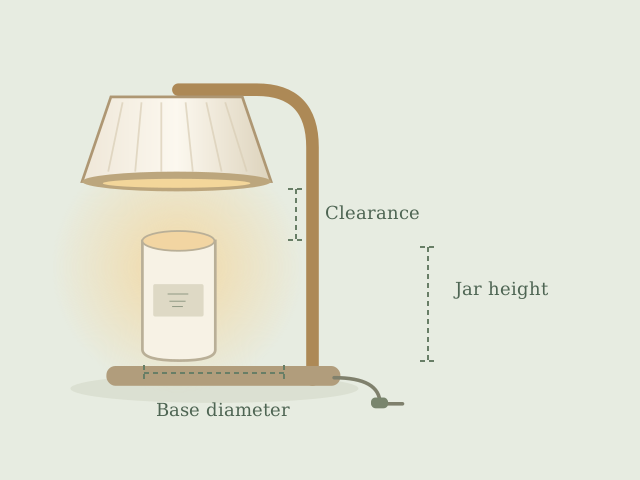
No. Compare actual outside jar height and widest diameter with the lamp's usable platform and operating clearance. The full lamp height and the candle's wax weight do not establish compatibility. Unusual rims and decorative shapes can limit fit even when the main jar body appears suitable.
The container must also be appropriate for the intended heat exposure. If the candle maker does not say whether warming is allowed, ask. Do not equate physical fit with approval for use. Our measurement guide separates those checks.
What bulb should I buy?
Use the exact bulb specification in the lamp manual. Confirm type, base, wattage and any additional restrictions the manufacturer gives. A bulb that enters the socket is not necessarily the correct replacement.
Do not increase wattage to make a candle melt faster. Do not assume a generic LED replacement provides the intended heat. Keep the model information available so you can order the approved part later, and disconnect power and allow cooling before replacement as instructed.
How long should a session last?
There is no single duration suitable for all lamps and candles. Follow the operating instructions for your combination. A timer's longest option is a feature setting, not a universal recommendation or proof that continuous use is appropriate.
Do not repeatedly restart a timer to bypass a stated use limit. Turn the warmer off before leaving home or sleeping. If the manual does not explain runtime sufficiently, ask the manufacturer before establishing a routine.
Does a timer make unattended use safe?
A timer can provide automatic shutoff, but it does not supervise the room. It cannot keep a curtain away, prevent a pet from pulling the cord or establish that the jar is undamaged.
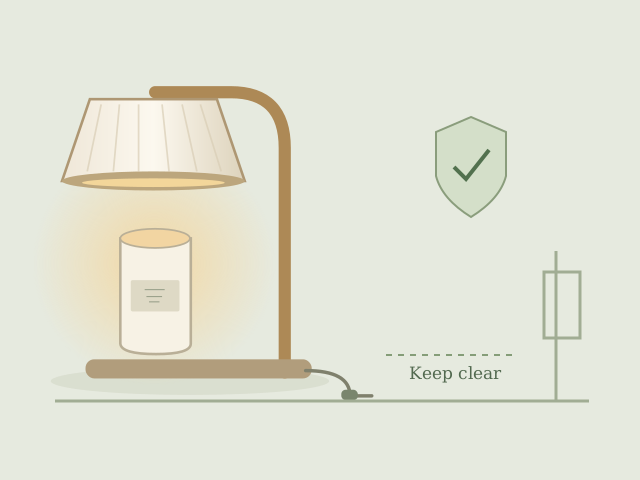
Treat it as a convenience within a careful routine. Keep the appliance attended, maintain the required clearance and switch it off before sleeping or leaving. Read the safety guide for the different checks needed before, during and after use.
Can I light the candle under the lamp?
Do not combine a lit wick with an operating warmer. These are different methods with different instructions. Adding a flame to the heating setup is not a way to improve fragrance or shorten warmup time.
If you want to alternate between methods, ask the candle maker whether that is allowed. Warming can change the wax surface and wick position. A wick that has shifted or become submerged should not be restored through an improvised repair.
Will the candle last longer?
Warming does not consume wax in the same way as burning, but the fragrance can still diminish. Remaining wax and remaining useful scent are different things. The manufacturer FAQ at Candle Warmers Etc. discusses this distinction for its products.
This does not establish a universal lifetime multiplier. Warm Home Notes has not measured candle longevity, and the result depends on the candle, settings and what you consider a useful scent. Avoid buying on a fixed promise that every candle lasts several times longer.
Why is the fragrance weaker than expected?
Check whether you are using the approved bulb, setting and clearance, and consider whether the candle has been warmed many times. Room conditions and fragrance preference can also affect your experience. Weak scent alone does not prove an electrical fault.
Do not compensate with a stronger bulb, foil, a covered shade or a raised candle. If the setup is correct but still disappointing, contact the maker. Our troubleshooting guide separates ordinary checks from problems that require support.
Is a warmer safe around children or pets?
The absence of a flame does not make the lamp risk-free. Hot parts, warmed glass, liquid wax and a pullable cord still matter. Consider climbing and jumping as well as ordinary reach when choosing a location.
If access cannot be prevented, use another location or keep the appliance off. A timer and a heavy base do not replace that decision. Do not assume scented products are suitable for every pet; consult a veterinarian about species-specific concerns rather than relying on a general home guide.
Can I use it in a bedroom, dorm or office?
Only if the actual appliance rules, room layout and household or building requirements permit it. A nightstand crowded with bedding and chargers may be a poor location. A dorm's candle restriction does not automatically authorize a heated lamp.
Check the rules and choose a stable, suitable surface with the required clearance and cord route. Use it while awake and nearby, then switch it off. See our placement guide for room-specific considerations.
What should I do with wax that no longer smells useful?
Follow the lamp and candle makers' instructions. Some products describe removing a depleted layer, but you should not improvise a hot-wax procedure. Ask for clarification if the directions are unclear or handling the jar would be awkward.
Never put wax into a sink or drain. Follow the relevant cooling, handling and local disposal guidance. Our candle care article explains how to keep storage, cleaning and warming maintenance separate.
Does Warm Home Notes sell or test these lamps?
This site provides educational guides. It does not sell lamps, publish hands-on test results or include affiliate shopping links in this version. Illustrations show general concepts and are not product photographs or proof of a specific model's design.
If affiliate relationships are added later, the actual links and relationship will need clear disclosure close to the relevant content. Our affiliate disclosure describes the current status, and our About page explains the editorial approach.